
Beyond the Static Interface.
Trackeno was born from a singular frustration: the homogenization of mobile interaction. We believe gaming applications shouldn't just function—they should breathe. Our mission is to bridge the gap between AAA high-fidelity visual standards and the efficiency demands of mobile hardware.
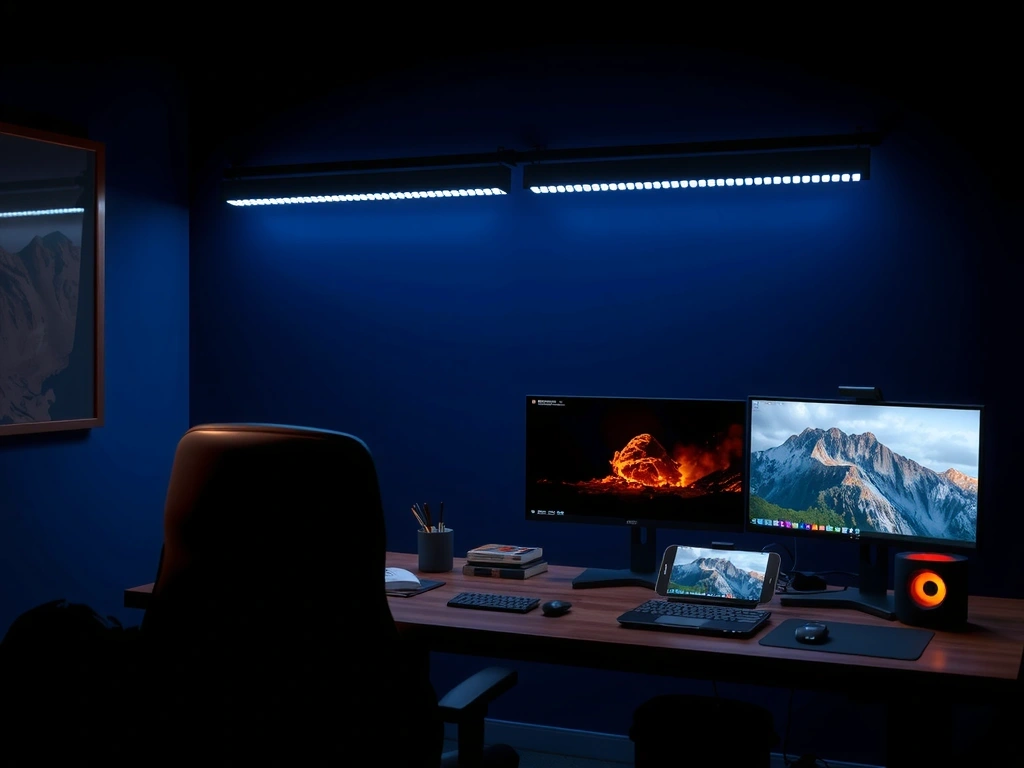
Developer Insight
Every pixel is stress-tested against thermal throttling thresholds on mid-range devices.
[ FOUNDRY_PRINCIPLES ]
Trackeno began not in a corporate boardroom, but during a 3:00 AM post-mortem of a project that felt "too safe." We realized that the industry was trending toward efficiency at the cost of soul—relying on templates that maximized clicks but minimized wonder.
We are a collective of veteran game developers and UI architects who transitioned from AAA pipelines to build something more agile. Our philosophy is Motion as Meaning. Every transition, every haptic tick, and every micro-interaction is designed to reduce cognitive load while increasing player immersion. We don't just ship apps; we ship digital environments that react to the rhythm of the user.
Methodological Note
Our approach is evaluated based on Robustness over Novelty. We prioritize persistent state management and stable FPS over superficial visual fluff. While this consumes more engineering hours upfront, it drastically reduces long-term technical debt and thermal overhead on mobile hardware.
"Without the limitation of 4GB RAM or specific GPU clock speeds, design becomes lazy. At Trackeno, we treat hardware constraints as the blueprint for our creativity."
M. Rossi
Lead Systems Architect
How We Prioritize
Ultra-Low Latency
We optimize for millisecond response times in global tournament environments.
- Optimizes: Competitive Edge
- Sacrifices: Global Server Reach (initially)
Battery Endurance
Our shaders are written to minimize GPU-induced thermal throttling.
- Optimizes: Daily Playtime
- Sacrifices: Non-Essential Raytracing
Security Overhead
Integrated anti-cheat modules that operate at the kernel level.
- Optimizes: Ecosystem Trust
- Sacrifices: Initial Load Velocity
Asymmetric Scaling
Adaptive assets that shift quality based on user hardware tier.
- Optimizes: Market Accessibility
- Sacrifices: Binary Size Compression
Solving asset bottleneck for mid-range hardware.
A partner developer approached us with a tactical RPG that suffered from frame-dropping during asset-heavy inventory transitions. On flagship devices, it was seamless; on 3-year-old Android units, it was unplayable.
Our team bypassed the standard engine loader and implemented a custom Predictive Caching Bridge. By analyzing player interaction patterns, we pre-loaded low-res proxies 200ms before transition, swapping them for full 4K assets only once the UI stabilized. The result was a 40% reduction in visible stutter without increasing the total RAM footprint.

Strategic Balance (Trade-Offs)
Visual Fidelity vs. Connectivity
High-res textures increase initial download size. Mitigation: We implement a dynamic chunk downloader that fetches ultra-high shaders only when the user is on an unmetered high-speed connection.
Input Lag vs. Global Matchmaking
Strict latency filters reduce player pool size. Mitigation: We use localized regional hubs with a 'Priority Queue' that guarantees sub-40ms ping, even if wait times increase slightly.
Encryption vs. Performance
Real-time packet encryption consumes CPU cycles. Mitigation: We offload encryption tasks to multi-core worker threads that remain dormant during high-action peaks.
Glossary of Opinion
The Future is
Trackeno Interactive.
Based in Rome, operating globally. We are actively looking for visionary studios to collaborate on the next generation of premium interactive applications.
HQ Operations
Via Roma 45, 00184 Roma, Italy