
Advanced Kinetic
Interactivity.
The Trackeno framework transforms static mobile applications into living environments. We prioritize fluid rendering, haptic choreography, and reactive physics to define the premium e-sports experience.

Real-time particle simulation reacting to gyroscope tilt and touch velocity. Optimally rendered for high-refresh 120Hz displays.
[ ENGINE_01 ]
The Particle Bloom System
In the competitive mobile landscape, visual feedback is the bridge between intention and victory. Our Particle Bloom effect isn't just cosmetic noise; it's a physics-integrated data layer. Every particle is a distinct GPU-instanced object that reacts to player input velocity and environmental gravitational constants.
This system allows the player to "feel" the momentum of their actions. As you perform high-speed maneuvers, the bloom intensifies, trailing behind the focal point in a cinematic streaking pattern that provides instant spatial orientation. It is a synthesis of aesthetic luxury and tactical utility.
The Lexicon of Interaction
Haptic Choreography
Beyond simple rumbles, we design complex vibration sequences that match on-screen physics. This defines the "weight" of our UI interactions, turning a flat glass screen into a tactile instrument.
Latency-Aware UI
We optimize for "perceived instantaneity." By predicting touch intent and initiating animation frames before the OS fully registers the release, we eliminate input drag in competitive contexts.
Spatial Sound Ripples
Visualizing sound waves as subtle ripples on UI surfaces. This accessibility-first feature ensures that players in muted environments still "see" the soundscape's impact.
Decision Lens:
Fidelity vs. Endurance
Every advanced feature introduces a trade-off. Architectural decisions are guided by strict criteria that prioritize competitive integrity over pure visual flair. When we implement a new effect, it must clear these benchmarks:
Battery Drain Cap
Effects must not increase power consumption by more than 12% over 30 minutes of standard play.
Input Priority
Rendering an advanced shader never supersedes input polling. Latency stays sub-16ms regardless of visual load.
Thermal Integrity
Visual complexity scales down dynamically if device sensors detect thermal throttling risk.


Custom Shader Morphing
Real-time environmental shifts using procedural shaders that react to the in-game time of day, changing the mood from cold navy to warm copper.

Reactive Micro-Lighting
Every tap produces a subtle localized light source that casts shadows away from the touch point, grounding the interface in a physical reality.
The Developer Insight
"Innovation at Trackeno isn't about how much we can add, but how seamlessly we can integrate. Our 2026 animation suite focuses on the 'sub-threshold' effects—those tiny details that the player doesn't consciously notice but would feel the absence of immediately if they were gone."
Marco Valentini
Lead UI/UX Architect, Trackeno
High-Fidelity
Social Presence
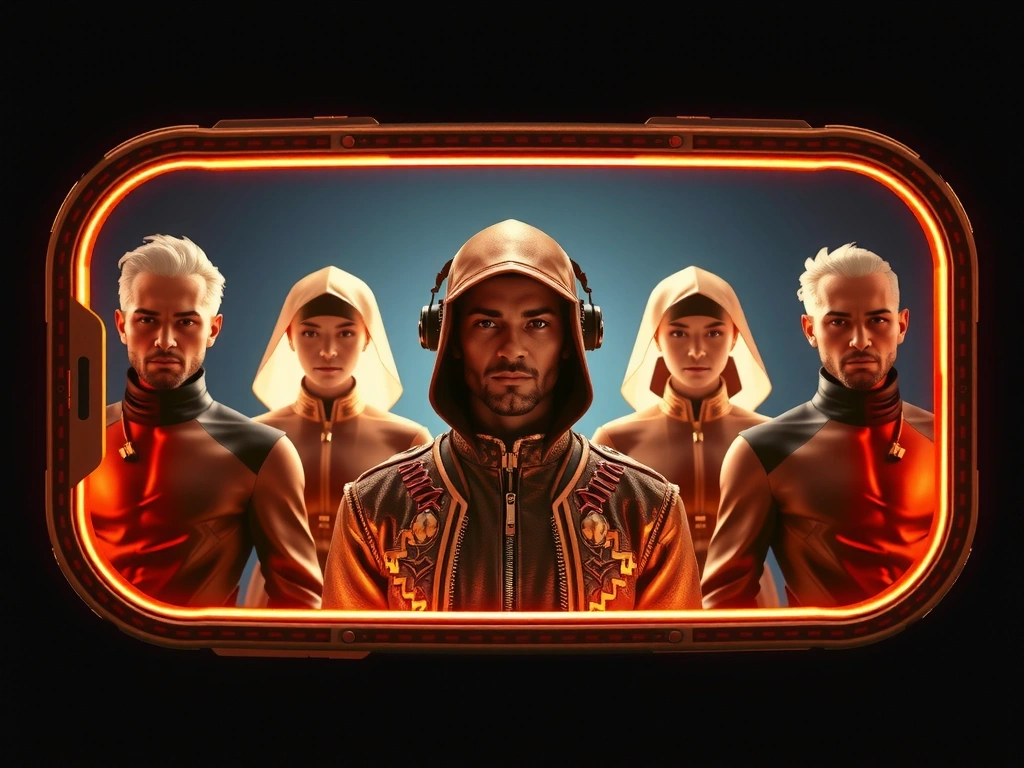
Atmospheric Avatars
In multiplayer hubs, standard static renders break immersion. Trackeno’s "Persona-Kinetic" system assigns subtle, non-looping idle behaviors to every avatar. Whether it’s a slight head tilt reacting to proximity or a weight shift during loot reveals, the animations are procedurally derived from player history and mood settings.
- Dynamic IK (Inverse Kinematics) for realistic foot placement.
- Proximity-based character gaze tracking.
- Subsurface scattering on skin/fabric for premium depth.
Core Verdict
Advanced animation is not a layer of paint—it is a functional component of the competitive apparatus. While hardware limits remain the primary constraint, our architecture aims to deliver 100% of the possible visual fidelity without sacrificing a single millisecond of input response.
Ready to
Optimize?
Explore our full technology stack or request a technical brief to see how these features can integrate into your competitive gaming ecosystem.